Donate to CVHA through helping.org


"Is there another way?"

Mission Statement   Guiding Principles
  Frequently Asked Questions
  Board of Directors   Board of Advisors

 
Mission Statement

The Catawba Valley Heritage Alliance is committed to the preservation of undeveloped land, improvements in bicycle and pedestrian access and protection of natural habitats for this and future generations through transportation reform, historic preservation and natural resource conservation.

 
Guiding Principles
 
Conservation: We believe in conservation that preserves undeveloped land and scenic areas, offers recreational opportunities and improves the environment. Land conservation serves many purposes, not the least of which is to provide opportunities for trail use, wildlife observation and education. In addition protection of green spaces can provide linkages between habitats critical for native species of flora and fauna. There are numerous other benefits to leaving certain areas undeveloped; for example erosion and flood control, improving air quality, providing vegetative buffers on waterways and directing development and growth away from important natural resource areas. The Catawba Valley Heritage Alliance works in voluntary cooperation with property owners to assist them in conserving their lands.

Economic Development: We believe in economic development that improves our quality of life. Open spaces have many economic benefits which contribute to the local economy. Greenway trails have been recognized in North Carolina for their value as an attractive tourism destinations as well.

Transportation Reform: We believe wise transportation development includes bicycle, pedestrian and public transit facilities. The Alliance seeks to promote improvements in the safety and efficiency of our transportation infrastructure so as to accommodate a wide range of modes which in turn may reduce the dependency on single occupancy motorized vehicles.

Sustainable Growth: We believe "smart" growth incorporates human and ecological concerns in land use. Polls show an overwhelming number of American voters support greater land management to control the effects of urban sprawl. Poorly planned communities cost tax payers millions and lead to public safety problems such as flooding, compromised air and water quality, school overcrowding, traffic congestion and reductions in public services such as fire, emergency and s ewer projects. Whereas, careful planning can not only improve public safety but save precious resources and protect capital investments. The development and realty community has begun to recognize that green space and park land are amenities which greatly effect their bottom line. The new approach to land use design called "New Urbanism" has recently emerged incorporating these feature and combining adaptive reuse of abandoned structures, infill areas and redevelopment of neglected old industrial sites. We believe that sustainable growth offers the promise of a brighter future with both a cleaner environment and a stronger economy.

Historic Preservation: We believe the character of a community is defined as much by its past as by it's commitment to the future. The Alliance seeks to preserve what remains of the cultural heritage of the region for the educational and scenic benefits they offer.

Accountability: We believe in partnerships that maximize human and financial resources. (Click here for list of affiliations and corporate sponsors.)

Efficiency: We believe in being responsible stewards of our financial resources as well as our natural resources.

back to top
 
FAQ

Q: What is a greenway?
A: The term "greenway" refers to a linear park which serves to protect waterways by providing vegetative buffers to control erosion and flooding. Greenways provide wildlife uninterrupted ribbons of openspace in which to forage, migrate and breed with minimal human impact.

Greenways offer trail users the opportunity to experience natural areas for observation, education and recreation. Greenway trails often serve to link parks, schools, historic sites and commercial areas with residential and workplace locales. The benefits associated with greenways are multifaceted and combine to offer local governments a "whole systems" approach to addressing a myriad of public service issues.

Q: How will a greenway effect my property value and the local economy?
A: The National Park Service states that properties located on or near greenways overwhelmingly experience an increase in annual assessments and thus contribute greatly to the local tax base.

Q: What about the issue of crime and vandalism on greenways?
A: Documented evidence, shows that the frequency of crime or vandalism on greenways and other linear parks is less than that which one is likely to experience in any neighborhood.

Q: What types of tax abatements are available to property owners whose land is connected to a greenway?
A: A land-owner who chooses to make a deed covenent restricting future development can qualify for a reduction in county property and estate taxes. This is a legal tool called a conservation easement. Another option is to consider a donation of a portion of the property whereby the donor may qualify for a tax credit under the NC Conservation Tax Credit Program.

back to top
 
Board of Directors

Executive Committee

Kenyon Kelly - President
Phil Piaski- Vice-President
MichelleDeese - Secretary
Kathy McAllister - Treasurer


Melvin Caldwell
Diane Fields
Rob Glynn
Polly Pearson
Guy Scronce
John Wepner


Ann Gaither
-- Founding Patron

W.Stine Isenhower
-- Member Emeritus


Board of Advisors

 
Lee Anderson
City of Morganton

Don Arrasmith
NC Rail-Trails

Kitty Barnes
County Commissioner


Sam Erwin
Western Piedmont Council of Governments

Chrisanne Mitchell
Formerly of Trust for Public Land

Tony Gallegos
Water Quality Adm. WPCOG

back to top


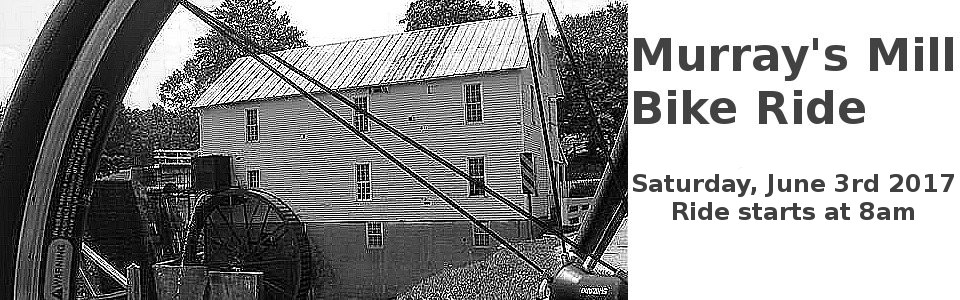
      Murry's Mill Bike Ride
June 7, 2008


Home  | What We Believe  | What's Hot  | Tool Box
Links  | Contact